
Manufacturing: monitoring a winding machine
An independent system for the coil winding of electrical equipment. It watches the winding process and the condition of the machine over a long period and works next to the local checks of the plant.
Electrical equipment manufacturing
The task
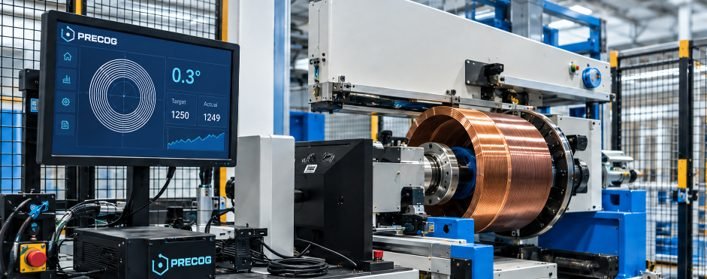
A winding machine winds coils for electrical equipment. A faulty winding costs material and time, and a worn machine produces more of them. The plant needs to know how often faulty windings occur, how much time passes between them, how the machines differ and whether the mechanical condition of a machine is changing.
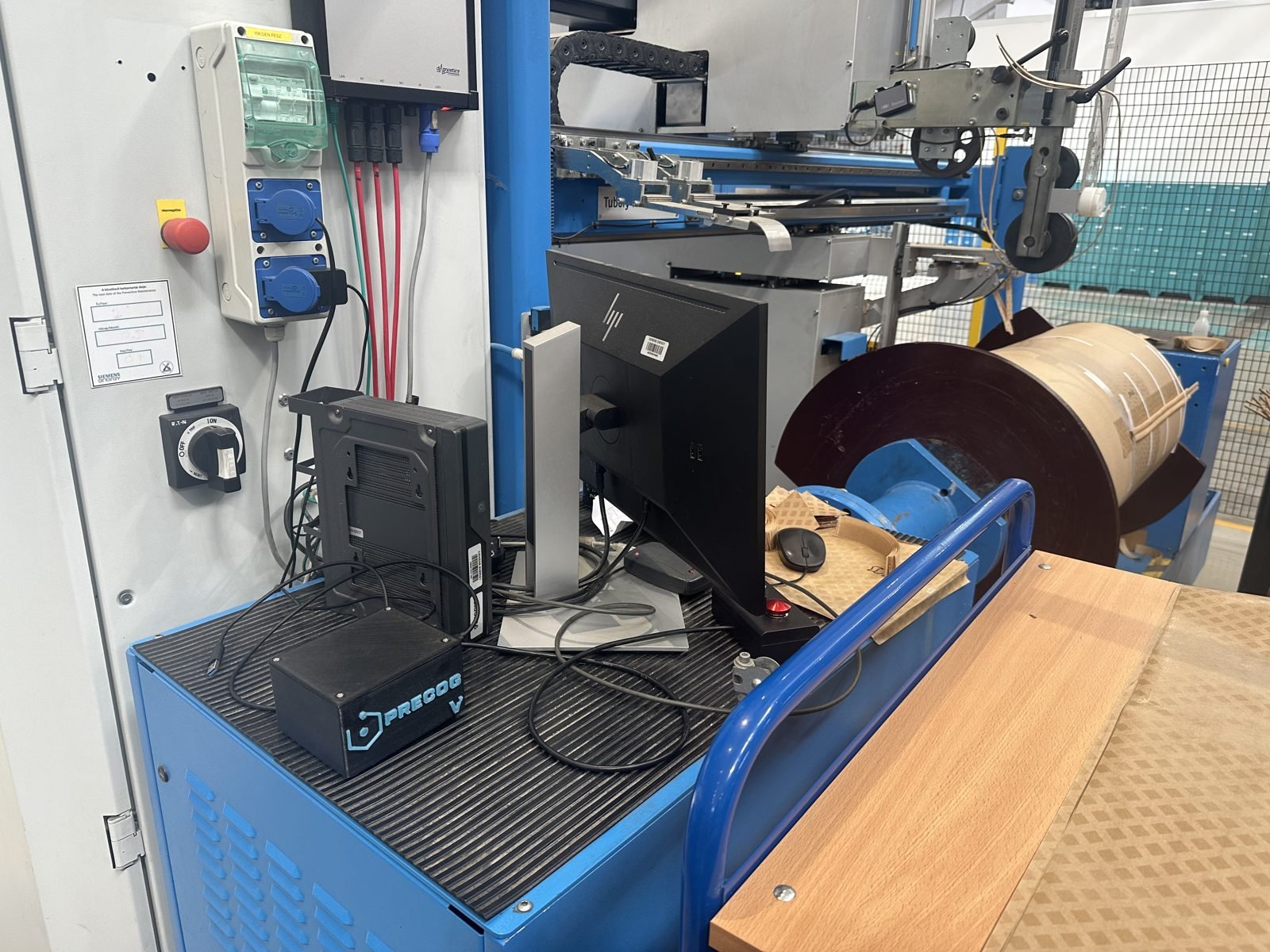
The system is built from rotation and position measurement, a plan check on the plant’s own computer, operator acknowledgement, a vibration measurement in parallel and the PRECOG analytics.
Concept
Two layers of checking
- Manages the winding plan.
- Compares the actual rotation and position with the plan.
- Shows the operator at once whether the winding follows the plan.
- Verifies the production process on site.
- Stores and analyses the history of windings and machine condition.
- Calculates the frequency of faulty windings and the time between them.
- Detects unusual frequency, trends and anomalies.
- Compares machines that do the same task.
Measurement
What is measured
Rotation and position
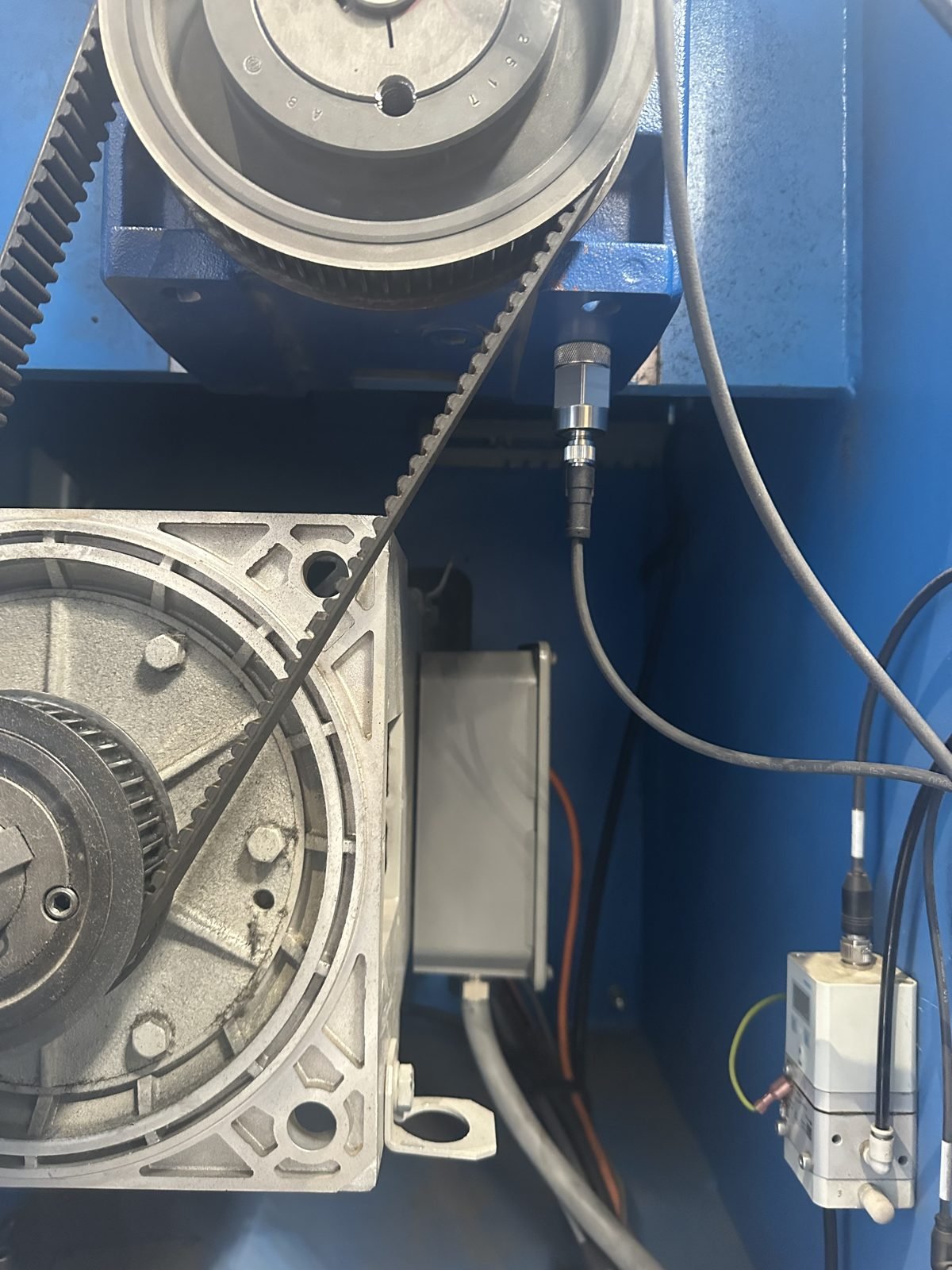
A rotation sensor reads the rotation and the position of the machine from a target element on the shaft.
Operator events
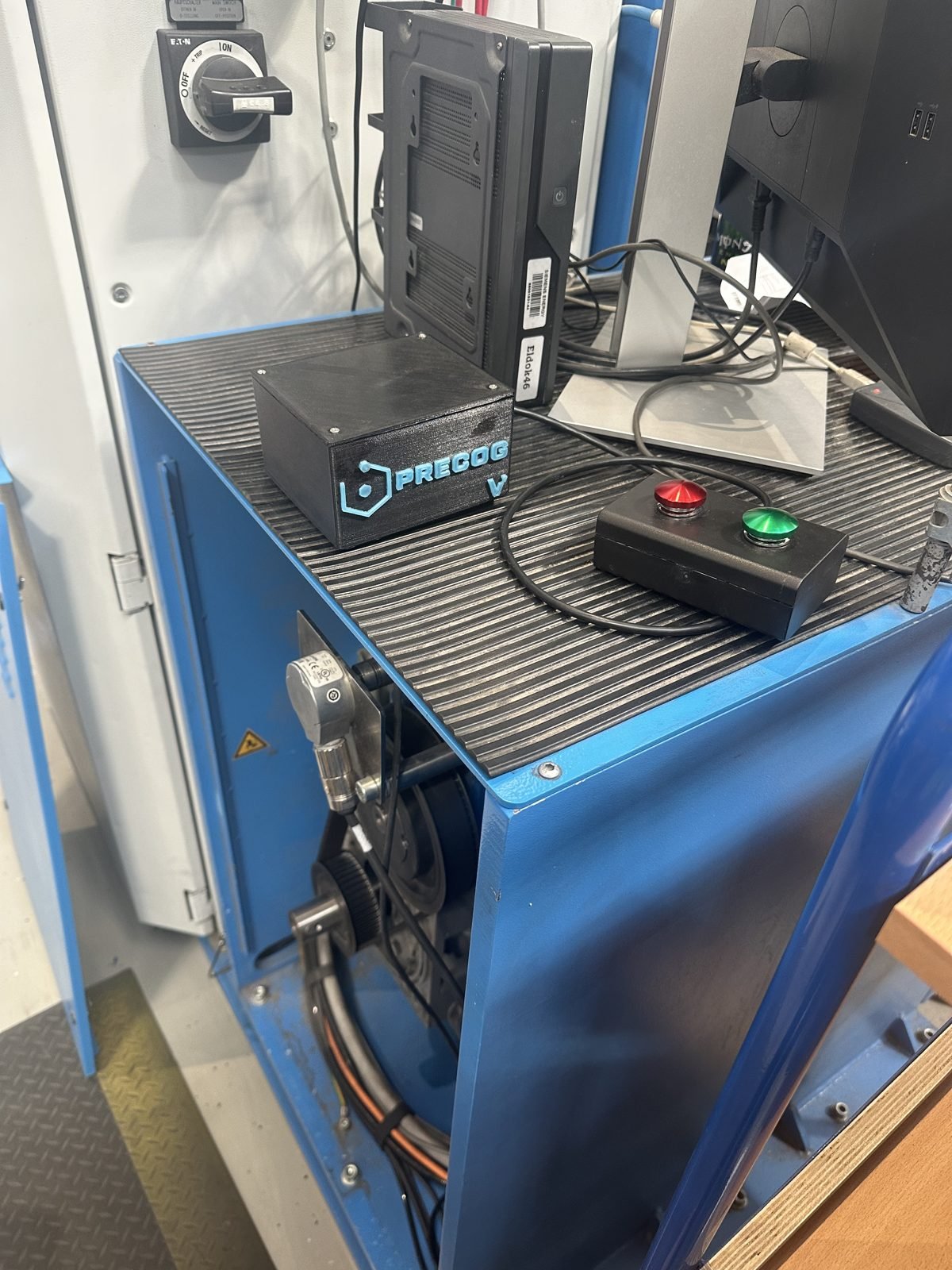
A green button confirms that the winding is correct. A red button reports a faulty winding.
Vibration
A vibration sensor follows the mechanical condition of the machine and the bearings in parallel with the winding cycles.
The automatic result of the local check and the button of the operator are stored as separate fields. This makes it possible to analyse later where they agree, where they differ and where the operator corrected the machine.
Data path
Data flow
- Measurement. The rotation sensor reads the rotation and the position.
- Interface. The sensor is connected to an industrial interface of Vida Soft, which also takes in the two buttons and the vibration sensor.
- Local transfer. The interface passes only the rotation, the position and the button events to the computer of the plant over USB.
- Local comparison. The software of the plant compares the winding with the plan and shows a deviation at once.
- Transfer to PRECOG. The same data and the vibration values go to PRECOG over a wired Ethernet connection.
- Analysis. PRECOG calculates the fault frequency, the time between faults, the trend, the anomalies and the machine condition.
Each winding event has a machine identifier that describes nothing, a cycle identifier, a time stamp and a sequence number, the rotation data and winding counts, the local result, the operator feedback, the vibration data and the transmission status.
Analytics
Indicators and anomalies
- Number of faulty windings
- Fault rate: faulty cycles compared with all cycles
- MTBF by cycles: the average number of good windings between two faults
- MTBF by time: the average time between two faulty windings
- Trend of the fault frequency
- Comparison of the machines
- A fault frequency that accelerates
- An unusual difference between two machines
- A recurring difference between the automatic result and the operator
- A change in vibration together with more faulty windings
For each machine, PRECOG builds a reference from the normal relation between winding cycles, fault rate, operator feedback and vibration. The anomalies are measured against that reference, and not against one fixed number.
Boundaries and security
Boundaries and security
- PRECOG does not control or stop the winding machine.
- PRECOG does not change the winding plan.
- The USB connection can carry only the rotation, the position and the button events. It cannot carry commands, settings or software changes.
- The Ethernet connection carries only predefined PRECOG data, and only outbound.
- The software of the interface and the software of the plant cannot be overridden or controlled remotely through the network connection.
For the pilot, the plant network has to allow only outbound HTTPS connections to the PRECOG API. No inbound connection from the internet is needed. The time comes preferably from the time server of the plant. The details of the security design are on the security and IT architecture page.
Installation
Installation
The interface and the two buttons can be built into an enclosure in the place of the unused display of the machine. The final mechanical design follows the local dimensions, the ergonomics for the operator, the cable routing, the electrical protection and the access for service.
Do you want to follow the quality and the condition of your production machines?